The science behind Snoozy Stars

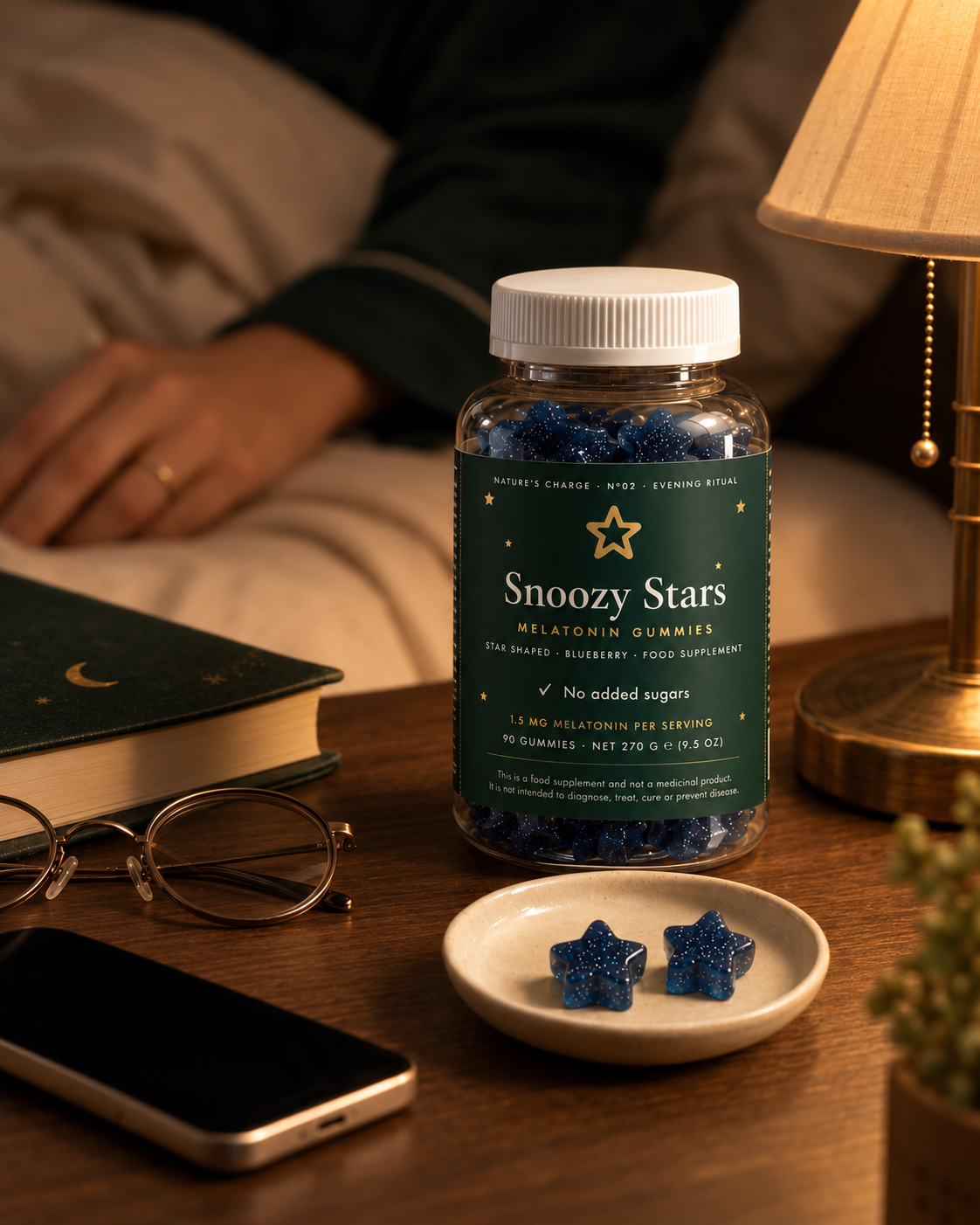
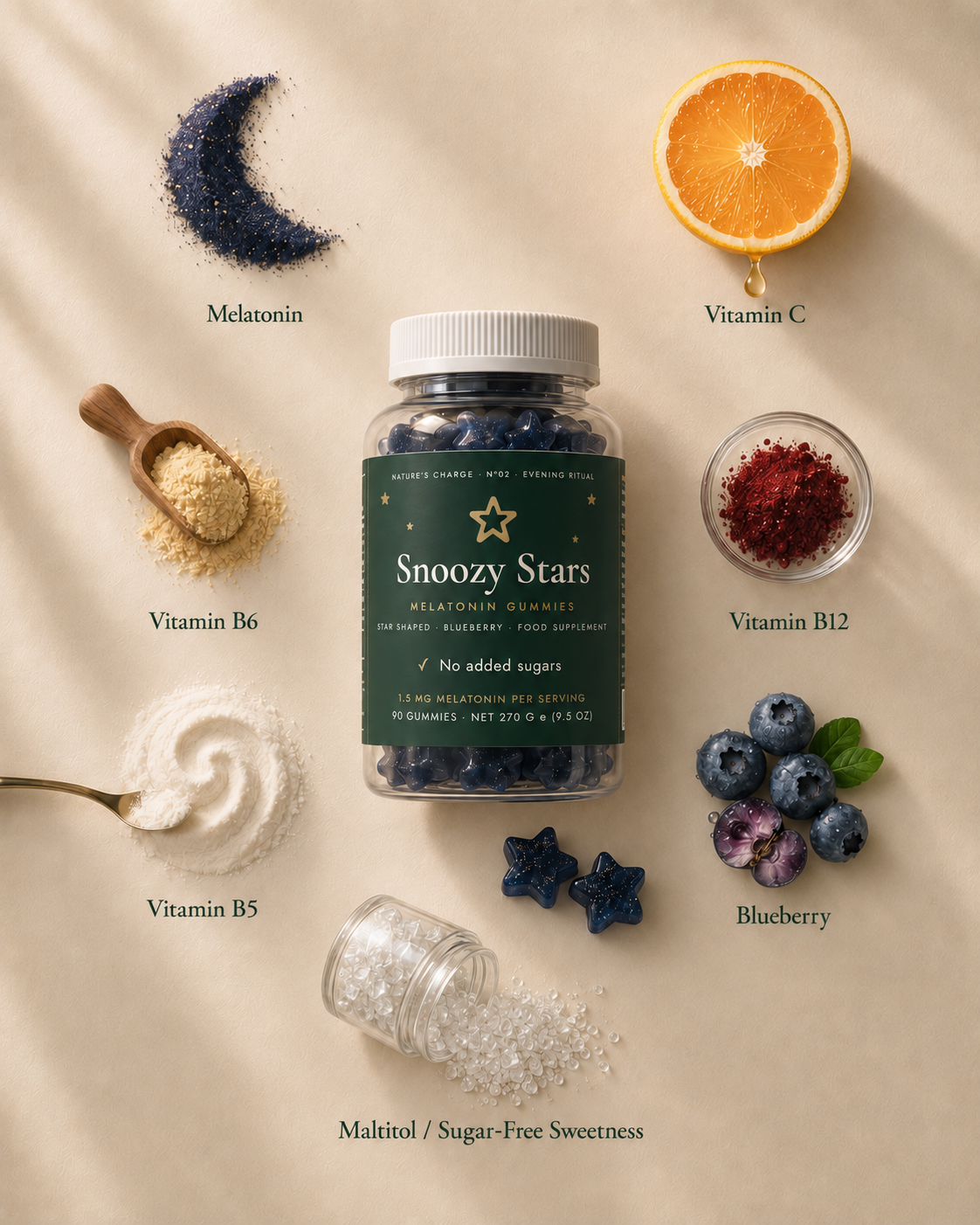
Snoozy Stars give adults 1.5 mg of melatonin per two-gummy serving, the low, physiological range the research supports, plus vitamins C, B5, B6 and B12. Blueberry, no added sugars. This page explains why the dose matters, what each ingredient does and what the studies found.

Backed by 12 peer-reviewed studies
1.5 mg melatoninVitamins C · B5 · B6 · B12No added sugarsAdults onlyThird-party lab testedBlueberry1.5 mg melatoninVitamins C · B5 · B6 · B12No added sugarsAdults onlyThird-party lab testedBlueberry

We hold ourselves to a
lower dose.

1.5 mg of melatonin, not 10. The research rewards the physiological range, and so do your mornings. Here is what happens between the jar and the pillow.

Signal
Two stars, 30 minutes before bed, lights low. Melatonin tops up the evening signal your brain should be sending but screens and stress have delayed.
Convert
B6 and B12 are cofactors in your own melatonin production and the clock's light sensitivity. That is why 1.5 mg is enough: we support the system rather than replace it.
Drop
The signal lands in the master clock: core temperature falls, alertness drops, the sleep window opens. Falling asleep stops being a fight.
Clear
Immediate-release melatonin has a half-life of about 40 to 60 minutes. A 1.5 mg dose is gone by morning, so you wake up clear instead of groggy.

Every ingredient, explained

Doses are per serving. NRV is the EU Nutrient Reference Value for adults. The claim under each ingredient is the wording authorised by the European Food Safety Authority (EFSA) and listed in the EU Register of health claims; where an ingredient has no authorised claim, we say so.

Melatonin

1.5 mg per serving (2 gummies)
Melatonin

The hormone that tells your body it is night

What it is:Melatonin is not a sedative. It is the hormone your pineal gland releases when the light fades: the signal that starts the night. Body temperature drops, alertness falls, the sleep window opens. Evening screens, late light, stress, shift work and age all delay or blunt that signal.In your body:Taken 30 minutes before bed, melatonin tops up the evening signal rather than knocking you out. It binds the MT1 and MT2 receptors in the brain's master clock (the suprachiasmatic nucleus), which lowers the clock's alerting drive and brings the timing of sleep forward. Because it works on timing, not sedation, it does not change the structure of your sleep the way sleeping pills do, and immediate-release melatonin is cleared within a few hours.What the research says:A meta-analysis of 19 randomised trials (1,683 people) found that melatonin shortened the time to fall asleep, increased total sleep time and improved sleep quality compared with placebo. In older adults with insomnia, a physiological 0.3 mg dose restored sleep efficiency, while 3 mg raised plasma melatonin far above the physiological range and into the next day. A systematic review of dosing concluded that the lowest effective doses are in the 0.3 to 2 mg range, taken about an hour before bed. A controlled study found 0.5 mg shifted the body clock about as effectively as 3 mg.
Authorised EU health claim: Melatonin contributes to the reduction of time taken to fall asleep (authorised for 1 mg of melatonin taken shortly before going to bed).

Sources: [1], [2], [3], [4], [5]

Vitamin B6 (pyridoxine)

1.4 mg · 100% NRV

Vitamin B6 (pyridoxine)

The cofactor your body needs to make its own melatonin

What it is:Vitamin B6 is a water-soluble vitamin your body cannot store for long. In its active form it is the cofactor for more than 100 enzymes, including the one that turns 5-HTP into serotonin, the raw material for melatonin.In your body:By supplying the cofactor, B6 supports your own evening melatonin production, so a low dose of added melatonin is enough. B6 also helps make GABA and dopamine and is involved in regulating hormonal activity.What the research says:In a placebo-controlled study, 250 mg of vitamin B6 before bed increased dream vividness and recall, a sign of its effect on sleep-related brain chemistry. Nutrition reviews describe B6 as a limiting factor in melatonin synthesis.
Authorised EU health claim: Vitamin B6 contributes to normal psychological function, to the regulation of hormonal activity, to normal functioning of the nervous system and to the reduction of tiredness and fatigue.

Sources: [7], [8]

Vitamin B12 (cobalamin)

3 mcg · 120% NRV
Vitamin B12 (cobalamin)

Supports the day-night rhythm and morning energy

What it is:B12 is needed to make red blood cells and protect nerve fibres. It is found naturally only in animal foods, so vegetarians, vegans, people over 50 and anyone on acid-reducing medication are often low.In your body:B12 supports normal energy metabolism and nerve function, and it acts on the circadian system: it increases the body clock's sensitivity to light and helps keep the sleep-wake rhythm in phase with the day. That makes it a natural partner for melatonin, which works on the same clock.What the research says:In a placebo-controlled study in healthy volunteers, two weeks of vitamin B12 improved self-rated sleep quality, concentration and the feeling of being refreshed on waking.
Authorised EU health claim: Vitamin B12 contributes to normal energy-yielding metabolism, to normal functioning of the nervous system, to normal psychological function and to the reduction of tiredness and fatigue.

Sources: [9]

Vitamin B5 (pantothenic acid)

2.4 mg · 40% NRV
Vitamin B5 (pantothenic acid)

Energy metabolism and mental performance

What it is:Pantothenic acid is the building block of coenzyme A, the molecule at the centre of energy metabolism in every cell.In your body:Coenzyme A is needed to burn carbohydrates and fats for energy and to make steroid hormones and neurotransmitters such as acetylcholine. The adrenal glands have a particularly high demand for B5.What the research says:The evidence for B5 is mainly mechanistic and nutritional: EFSA accepted that pantothenic acid contributes to normal mental performance and to the synthesis and metabolism of steroid hormones and some neurotransmitters.
Authorised EU health claim: Pantothenic acid contributes to normal mental performance, to the reduction of tiredness and fatigue, and to normal synthesis and metabolism of steroid hormones, vitamin D and some neurotransmitters.

Sources: [10]

Vitamin C

30 mg · 38% NRV
Vitamin C

Antioxidant and immune support

What it is:Vitamin C (ascorbic acid) is a water-soluble antioxidant your body cannot make. It is concentrated in the adrenal glands and the brain, and it is used up faster during stress and illness.In your body:Vitamin C protects cells from oxidative stress, is needed to make collagen, carnitine and the neurotransmitter noradrenaline, and supports the normal function of immune cells.What the research says:A 2017 review summarised how vitamin C supports both the innate and the adaptive immune system and how deficiency raises susceptibility to infection.
Authorised EU health claim: Vitamin C contributes to the normal function of the immune system, to the protection of cells from oxidative stress, to normal psychological function and to the reduction of tiredness and fatigue.

Sources: [11]

Blueberry

Natural flavour and colour

Blueberry

Real fruit taste, colour from nature

What it is:The soft blueberry taste comes from natural flavouring, and the deep blue comes from a natural colour rather than synthetic dyes.In your body:A gummy only works if you take it. The stars are the small, pleasant ritual that gets you to put the phone down and go to bed at the same time every night, which is the part of sleep hygiene that matters most.

Maltitol

Sugar-free sweetness
Maltitol

Sweet and chewy, without added sugar

What it is:Maltitol is a sugar alcohol made from starch, with roughly half the calories of sugar and a much smaller effect on blood sugar. It gives the stars their chew and sweetness without added sugar and without the sticky, tooth-coating finish of a candy gummy.In your body:No sugar before bed means no blood-sugar spike, no sticky teeth and nothing that argues with your toothpaste. As with all polyols, very large amounts can have a laxative effect; two stars a night are far below that.

Why we stay low-dose

Three results that decided the dose. Full citations at the bottom of the page.

−7 min
faster to fall asleep

Average reduction in time to fall asleep across 19 randomised trials, with total sleep up by 8 minutes and better sleep quality than placebo.

Ferracioli-Oda et al., 2013, meta-analysis [1]

0.3 mg
already works

In older adults with insomnia, a physiological 0.3 mg dose restored sleep efficiency. 3 mg pushed plasma melatonin far above normal and into the next day.

Zhdanova et al., 2001 [2]

0.5 vs 3 mg
same clock shift

A 0.5 mg dose shifted the body clock about as effectively as 3 mg in a controlled study, which is why we stay low instead of going to 5 or 10 mg.

Burgess et al., 2010 [4]

Study results describe the participants and doses in those trials, not a guarantee for every person. Snoozy Stars provide 1.5 mg of melatonin per serving of two gummies.

Naturally Made,Carefully Dosed

We believe a sleep gummy should be honest about its dose. Here is what Snoozy Stars are designed to stand for in every jar.

  • 1.5 mg melatonin per serving: the low, physiological dose the studies support
  • Vitamins B6 and B12, so your own melatonin pathway keeps working
  • No added sugars: sweetened with maltitol, nothing sticky before bed
  • Adults only, blueberry, every batch third-party lab tested
  • A two-star ritual you look forward to, so the bedtime stays fixed
Fall asleep faster tonight

For adults who want to fall asleep faster, without the 10 mg hangover.
Your Questions, Answered

Why 1.5 mg and not 5 or 10 mg like most gummies?
Because the research does not reward high doses. In controlled studies 0.3 to 2 mg restored sleep efficiency and shifted the body clock about as well as 3 mg, while higher doses left melatonin elevated into the next day, which is where the morning fog and vivid dreams come from. The EU authorised claim is based on 1 mg. 1.5 mg sits in the physiological range: enough to top up the signal, not enough to override it.
Is melatonin habit-forming?
Melatonin is a hormone your body makes every night; in safety reviews it does not cause dependence or withdrawal, and the most common side effects are mild (headache, dizziness, nausea, daytime sleepiness at higher doses). It is still best used as part of a fixed bedtime routine rather than as a replacement for one.
Will I feel groggy in the morning?
At 1.5 mg immediate-release, most people do not: the dose is cleared within a few hours. Grogginess is mostly a high-dose problem. If you do feel it, take the stars a little earlier in the evening.
Can I combine Snoozy Stars with the Magnesium Evening Drink?
Yes. The drink works on muscles, nerves and the stress response; the stars work on the timing signal. Many customers drink the ritual every evening and keep the stars for nights they need an extra push.
Who should not take them?
Snoozy Stars are for adults only. Do not use if you are pregnant or breastfeeding. If you have an autoimmune condition, epilepsy, depression, or take blood thinners, immunosuppressants, blood-pressure medication or sedatives, talk to your doctor first. Do not drive or operate machinery after taking them.
Is there sugar in them?
No added sugars. The sweetness comes from maltitol, a sugar alcohol with about half the calories of sugar and a much smaller effect on blood sugar. As with all polyols, excessive consumption may have a laxative effect; two stars a night are far below that.
How many stars, and when?
Two stars, 30 minutes before you want to be asleep, at roughly the same time every night. 45 nights per jar.
References (12)
  1. Ferracioli-Oda E, Qawasmi A, Bloch MH. Meta-analysis: melatonin for the treatment of primary sleep disorders. PLoS ONE. 2013;8(5):e63773.Source
  2. Zhdanova IV, Wurtman RJ, Regan MM, Taylor JA, Shi JP, Leclair OU. Melatonin treatment for age-related insomnia. Journal of Clinical Endocrinology & Metabolism. 2001;86(10):4727–4730.Source
  3. Vural EM, van Munster BC, de Rooij SE. Optimal dosages for melatonin supplementation therapy in older adults: a systematic review of current literature. Drugs & Aging. 2014;31(6):441–451.Source
  4. Burgess HJ, Revell VL, Molina TA, Eastman CI. Human phase response curves to three days of daily melatonin: 0.5 mg versus 3.0 mg. Journal of Clinical Endocrinology & Metabolism. 2010;95(7):3325–3331.Source
  5. EFSA Panel on Dietetic Products, Nutrition and Allergies. Scientific Opinion on the substantiation of a health claim related to melatonin and reduction of sleep onset latency. EFSA Journal. 2011;9(6):2241.Source
  6. Andersen LP, Gögenur I, Rosenberg J, Reiter RJ. The safety of melatonin in humans. Clinical Drug Investigation. 2016;36(3):169–175.Source
  7. Ebben M, Lequerica A, Spielman A. Effects of pyridoxine on dreaming: a preliminary study. Perceptual and Motor Skills. 2002;94(1):135–140.Source
  8. Peuhkuri K, Sihvola N, Korpela R. Dietary factors and fluctuating levels of melatonin. Food & Nutrition Research. 2012;56:17252.Source
  9. Mayer G, Kröger M, Meier-Ewert K. Effects of vitamin B12 on performance and circadian rhythm in normal subjects. Neuropsychopharmacology. 1996;15(5):456–464.Source
  10. EFSA Panel on Dietetic Products, Nutrition and Allergies. Scientific Opinion on the substantiation of health claims related to pantothenic acid. EFSA Journal. 2009;7(9):1218.Source
  11. Carr AC, Maggini S. Vitamin C and immune function. Nutrients. 2017;9(11):1211.Source
  12. European Commission. EU Register of nutrition and health claims made on foods; Commission Regulation (EU) No 432/2012 establishing a list of permitted health claims.Source

Food supplement with melatonin, for adults only. Take two gummies 30 minutes before bed; do not exceed the recommended dose. Not for children, pregnant or breastfeeding women. Contains a sweetener (maltitol): excessive consumption may produce laxative effects. This page is for information and is not medical advice. Food supplements are not a substitute for a varied, balanced diet and a healthy lifestyle. Do not exceed the recommended daily dose. Keep out of reach of children. If you are pregnant, breastfeeding, taking medication or have a medical condition, consult your doctor before use. These statements have not been evaluated by the Food and Drug Administration. This product is not intended to diagnose, treat, cure or prevent any disease.